



While it’s easy to fall into the trap of spending your entire budget on expensive corporate catering, memorable events are achievable without breaking the bank. Finding a balance between cutting back on opulent catering and creating a professional experience is key to securing the best value.
This guide by Catering By Design explains how to gain the best corporate catering value. Explore practical strategies, such as defining your requirements, cost-saving strategies and the red flags to avoid in a catering company.
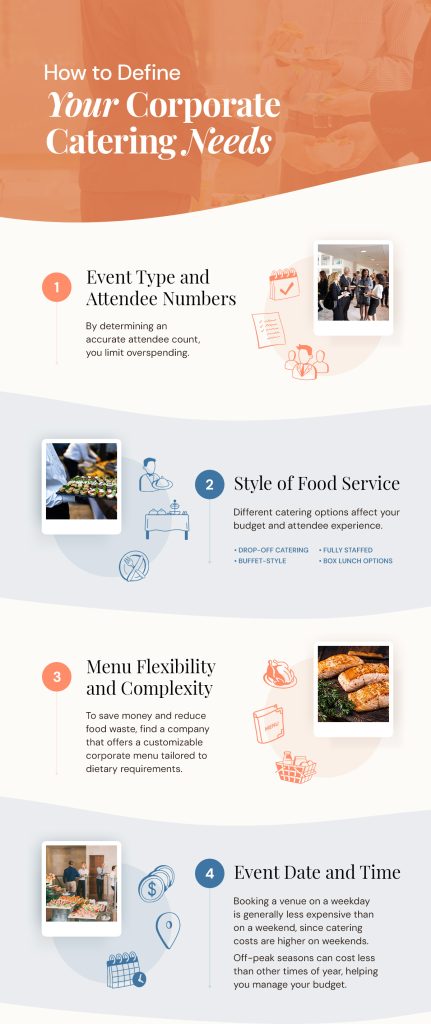
Corporate events vary widely. Before you begin researching catering companies, evaluate your event’s agenda and expectations. Focusing on the factors below gives you a clearer picture of your catering needs:
Overall attendee numbers, the event type and venue are key to maintaining your budget. Perhaps you’re organizing a large office party with more than 100 guests or a small lunch get-together of 20-50 colleagues.
The formality of the event is an important factor in finalizing your menu. An intimate lunch event of 20 colleagues or fewer may call for a more formal plated option, while a large holiday party might be easier to feed with a buffet or drop-off catering. Additionally, attendee numbers affect catering prices, with smaller numbers typically paying more per person and larger events costing less per person.
By determining an accurate attendee count, you limit overspending.
Corporate catering is not a one-size-fits-all experience. Different catering options affect your budget and attendee experience:
Deciding what to include on your menu is a significant factor in your event’s budget. Depending on how formal or informal your event is, you may decide on a selection of wraps and sandwiches to keep costs minimal.
Formal events, such as dinners or galas, warrant a more premium menu selection, including meat and fish dishes and canapés. To save money and reduce food waste, find a company that offers a customizable corporate menu tailored to dietary requirements.
The date and time of your event are essential cost considerations. Booking a venue on a weekday is generally less expensive than on a weekend, since catering costs are higher on weekends. Off-peak seasons can cost less than other times of year, helping you manage your budget.
Furthermore, switching your original plans of a formal sit-down dinner to a casual breakfast event may save you money. Longer staffing shifts and higher food costs are the primary reasons why dinner events are more expensive.
Securing a caterer for your corporate event requires more than paying for the food. Corporate catering can involve various costs that may come as a surprise. Before signing on the dotted line, prepare for additional expenses that can impact your budget:
For a corporate lunch or buffet service, the average price per person sits between $15 and $40. Whether you choose a drop-off service or buffet catering, the cost per person generally covers the food and delivery. Additional charges, such as staffing and setup, are usually not included in the per-person price.
While often overlooked, these additional costs help build a pleasant experience for your attendees. Below are the familiar hidden costs:
Transparency helps you better understand catering costs. Ask for a full breakdown and itemized invoice to know what you’re paying for, including equipment and gratuity. Be sure to request transparent pricing and a written invoice.
Having the costs in black and white helps you compare invoice breakdowns with other vendors to find a suitable caterer.
Although low-cost options are favorable for your budget, it’s essential to prioritize the guest experience and strike a balance between cost and quality. When comparing caterers, assess the following points:
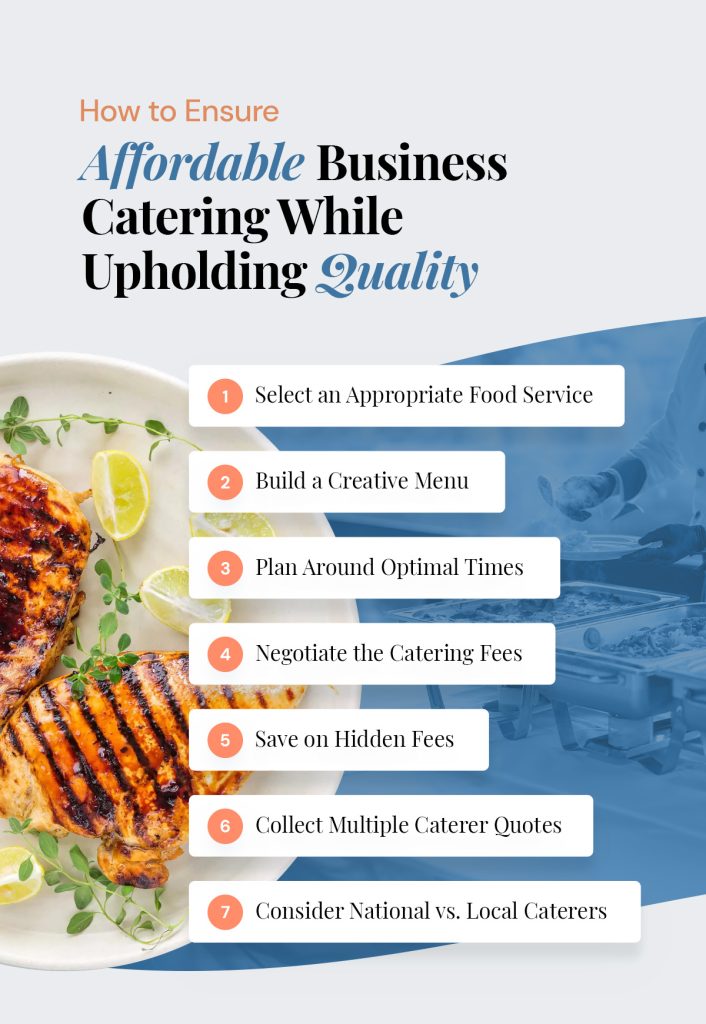
With careful planning and consideration, prioritizing cost-saving measures creates an excellent event without compromising quality. Explore the following ways to save money and elevate the attendee experience:
Choose a type of food service that suits the atmosphere of your event. Think about the event type and whether it warrants the formality of a fully staffed arrangement or a casual buffet style.
A buffet provides a happy medium between formal and informal. Attendees can help themselves from a professional setup, and a buffet is usually less expensive than a fully staffed operation.
Some catering vendors may supply set menus that include food choices unsuitable for your attendees, such as menus without gluten-free or vegan dishes. It’s advisable to partner with a catering vendor that allows customization to create a menu specific to your needs.
Avoid wasting money on inappropriate foods and organize cost-effective office catering options, like salad and pasta bars.
Planning your event for specific days and times helps cut costs. A breakfast meeting or lunch gathering generally costs less than an evening sit-down dinner. Breakfast and lunch events may require fewer staff members than evening events.
Besides organizing your event for a weekday, setting a date outside of busy periods like the holidays and summer can save money.
Larger-scale events with higher attendee numbers can secure corporate event catering deals. Primarily, if your company frequently hosts or plans to host regular events, you’re in a strong position to negotiate fees with catering vendors.
Consistent business with a single vendor helps maintain a strong relationship, and the vendor may offer a special loyalty discount.
One way to keep costs down is to handle the setup yourself. Particularly if you’re serving box lunches or even a buffet, the setup is simple and requires minimal staff. Furthermore, you can save money by negotiating on delivery fees for larger orders.
With gratuity, be sure to check whether it’s included in the final total or if you’ll have to pay it on top.
Catering service prices vary between vendors. Reach out to multiple vendors — at least three — with the exact requirements to compare costs. You can examine the costs in-depth by collecting itemized proposals from each vendor.
Compare costs alongside each vendor’s experience with events similar to yours.
Catering companies with a national presence may seem like a more convenient option to organize your event. However, you’ll likely experience a more personalized service by hiring a local catering vendor. A local vendor can maintain consistent communication to help you reach your goals and offer menu flexibility.
When choosing a catering vendor for your event, you need to consider more than cost. It’s essential to consider a vendor’s previous experience and reviews to maintain your reputation and event quality. During your research, watch out for the red flags below:
The best time to start planning your corporate event’s catering is approximately 4-6 weeks before the event date. This time frame offers enough time for you to build your menu, gather dietary requirement information and provide notice for the vendor to prepare.
Planning your event’s catering as early as possible leaves you in a strong position to negotiate favorable rates with the vendor. Maintain a balance between cost and quality as you search for vendors. Choosing a slightly more expensive vendor may indicate they offer better-quality food and a seamless experience from delivery to cleanup.
Here are some FAQs to help you source the best value corporate caterer:
Headcount confirmation depends on the event scale. Ideally, you’ll be able to confirm the total headcount by approximately 48-72 hours before the event. Especially for larger events, try to give as much notice as possible to avoid disappointment.
Be sure to ask catering vendors for certifications in food service safety. Vendors with relevant experience maintain food service safety regulations and operate with safety at the forefront of everything they do.
Yes, choosing a caterer with experience in corporate events is highly recommended. They are typically better equipped to meet professional standards, adhere to timelines and handle the logistics of corporate events.
Once the event is over, send out feedback forms asking about attendee experience and catering options. Be sure to include questions about food variety, portion sizes, allergy and dietary requirements, the food service and quality.
Attendee feedback offers a strong indication of whether you’ll use the same vendor for future events.
To secure the best value in corporate catering, you need a strategic approach that balances cost-effectiveness with a memorable attendee experience. By clearly defining your event’s needs, exploring cost-saving strategies and diligently avoiding common red flags in catering companies, you can achieve a successful corporate event without exceeding your budget.