



Short Answer: Planning catering for dietary requirements starts with gathering guest information early, choosing a caterer that offers vegetarian, vegan, gluten-free, and allergy-friendly options, and working with them on an inclusive menu that labels every dish clearly. Catering By Design offers customizable catering menu options for vegan, vegetarian, gluten-free, kosher-style, and allergy-friendly needs across corporate events, weddings, and social gatherings in the Triangle.
Dietary restrictions are limits on the foods a person eats due to health issues, medical conditions, religious beliefs, or lifestyle choices. Common dietary restrictions include vegetarian and vegan diets, gluten-free diets for celiac disease or gluten sensitivity, kosher and halal diets tied to religious beliefs, and specific dietary needs due to food allergies or lactose intolerance. Careful planning around any dietary restrictions helps every guest feel included and safe at your event.
Understanding common dietary restrictions before your event lets you build an inclusive menu that fits diverse dietary needs at every table.
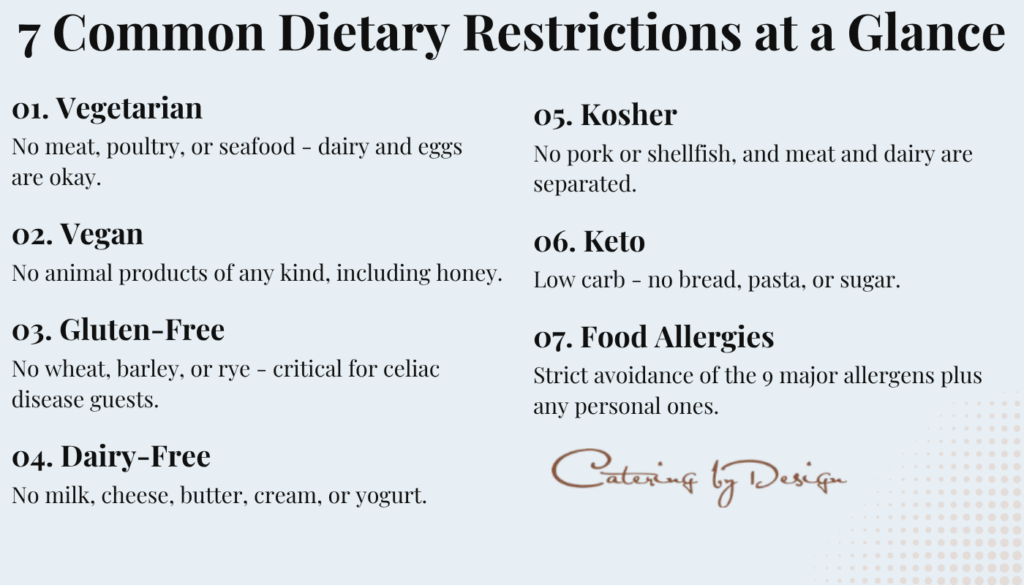
The catering industry recognizes several common dietary restrictions that come up at nearly every event. Here’s what event organizers need to know about each.
A vegetarian diet excludes meat, poultry, and seafood but includes dairy products and eggs. Vegetarian option menus commonly feature pasta primavera, grilled vegetable platters, cheese and vegetable quiches, stuffed bell peppers, and mushroom risotto. Most catering menu options include at least one vegetarian menu item, and adding vegetarian catering options is easy for any experienced caterer.
A vegan diet excludes all animal products, including meat, poultry, seafood, dairy products, eggs, and honey. Vegan catering options feature plant-based diet dishes like Buddha bowls, roasted vegetable platters, hummus and pita, quinoa salads, and plant-based proteins like tofu, tempeh, and chickpeas. Ask your caterer about hidden ingredients that may contain animal products, such as butter in bread, honey in dressings, or eggs in baked goods.
A gluten-free diet excludes gluten-containing grains like wheat, barley, and rye. Guests with celiac disease, gluten intolerance, or gluten sensitivity need strict gluten free catering with dedicated prep to prevent cross-contact. Safe menu items include rice, quinoa, gluten-free pasta, roasted meats without breading, and fresh salads with gluten-free salad dressing.
Guests with lactose intolerance or dairy allergies need a dairy free menu that excludes milk, cheese, butter, cream, and yogurt. Alternatives include olive oil in place of butter, plant-based milks, and dairy-free desserts like fruit sorbet or dark chocolate.
Food allergies can trigger a serious allergic reaction and require the most careful planning. The FDA identifies nine major food allergens that account for most reactions: milk, eggs, fish, crustacean shellfish, tree nuts, peanuts, wheat, soybeans, and sesame. A nut allergy or tree nut allergy is especially common and can be triggered by trace amounts, so allergy friendly catering practices matter. Ask your caterer about their protocols for handling each common allergen and confirm they can offer allergy friendly food prepared in a separate area to avoid cross-contact.
Kosher catering follows religious beliefs that separate meat and dairy, exclude pork and shellfish, and require certified kosher meal preparation. Halal diets exclude pork and alcohol. Religious dietary restrictions like these are important to plan for at weddings, cultural events, and social gatherings with diverse guest lists. Some caterers specialize in kosher meal service and can source certified ingredients, while others offer kosher-style menu options prepared following kosher principles.
A keto diet cuts carbohydrates in favor of proteins and fats. Keto catering options include grilled meats, cheeses, avocado, low-carb vegetables, and salads without high-carb dressings. Keto has become a common lifestyle choice at more corporate events each year.
| Dietary Restriction | Foods to Avoid | Safe Menu Options |
| Vegetarian | Meat, poultry, seafood | Pasta, salads, dairy, eggs |
| Vegan | All animal products | Plant-based proteins, grains, produce |
| Gluten-Free | Wheat, barley, rye | Rice, quinoa, gluten-free pasta |
| Dairy-Free | Milk, cheese, butter, cream | Olive oil, plant-based milks |
| Kosher | Pork, shellfish, mixed meat and dairy | Certified kosher meals |
| Keto | Bread, pasta, sugar | Meats, cheese, low-carb vegetables |
| Food allergies | Specific allergens | Labeled, allergen-free menu items |
Start gathering dietary information from guests during the invitation stage. For a formal event like a wedding, add a question about any dietary restrictions to the RSVP so you have detailed information well before final headcounts. For a corporate event, send a company-wide email or short survey asking each employee about diet restrictions, food allergies, or medical conditions that could affect their meal.
Wondering how to ask for dietary requirements on an invite? Include a line like “Please let us know of any dietary needs” with a checkbox list of common options (vegetarian, vegan, gluten-free, dairy-free, kosher, halal) and a free-text box for anything else. Save this detailed information on file for future events so you can build inclusive event planning into every gathering. Employees who attend recurring catered lunches often have the same dietary preferences at every event, so a stored list saves time later.
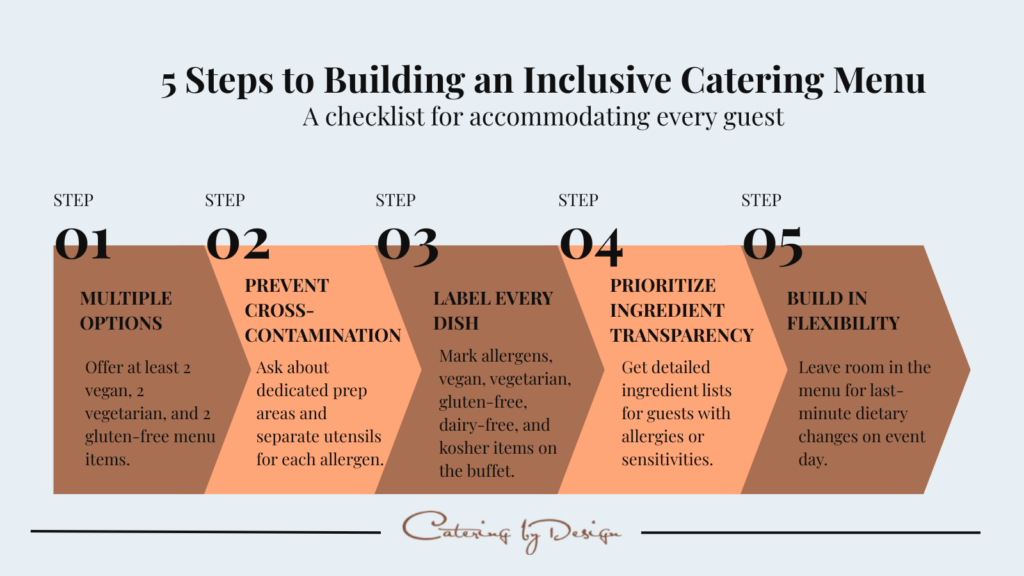
Once you have guest information, work with your caterer to build an inclusive menu around every dietary need.
When choosing a caterer, ask questions about how they manage special dietary requirements.
Here is a quick checklist:
The best catering tips for event planners include booking early, sharing your guest dietary list at least two weeks ahead, and requesting a tasting so you can verify menu items match dietary requirements before the day of the event. Ask whether the caterer offers healthy catering options like grilled proteins, whole grains, and fresh vegetables that fit multiple diets at once.
Catering By Design has planned inclusive catering for Triangle corporate events, weddings, and social gatherings since 2000. Every customizable menu we offer accommodates diverse dietary needs, and we build dedicated Vegan Box Lunches, Vegetarian Box Lunches, and Gluten Free Box Lunches at $14.95 per person for corporate lunches and drop-off catering across Raleigh, Cary, and Durham.
Our team works with you on specific dietary needs, including food allergies,and lifestyle-based diets, and every buffet setup includes clear labeling. As a Leading Caterers of America member and 2026 Cary Magazine Maggy Award winner for Best Caterer, we prioritize careful planning and ingredient transparency so every guest feels included.
To plan your inclusive event menu, contact us today!
The most common dietary restrictions at events are vegetarian, vegan, gluten-free (for celiac disease or gluten sensitivity), lactose intolerance and dairy-free, kosher and halal diets, and food allergies to common allergens like tree nuts, peanuts, dairy products, and shellfish.
Add a short line to your RSVP or invitation asking about any dietary restrictions, food allergies, or specific dietary needs. Include checkbox options for vegetarian, vegan, gluten-free, and dairy-free, plus a free-text field for allergies or other requirements. This is a key step in any event planning checklist.
Share dietary requirements with your caterer at least 2 to 3 weeks before your event. For weddings, corporate events, and large gatherings, share preliminary counts as early as 4 to 6 weeks ahead so the catering team has time to build an inclusive menu.
Yes. We regularly build custom menus that accommodate vegan, vegetarian, gluten-free, dairy-free, and allergy-friendly options at the same event, with clear labeling and separate prep to prevent cross-contamination.
A food allergy triggers an immune response that can cause a serious allergic reaction, while a food intolerance is a digestive issue with less severe symptoms. Both need careful menu planning, but food allergies require stricter cross-contamination prevention practices.
The best way to handle dietary restrictions in office catering is to keep a saved employee dietary list, order boxed lunches or clearly labeled buffets, and default to menus that include at least two vegetarian, vegan, and gluten-free options for every recurring order. This keeps ongoing corporate catering simple and inclusive.