



How to Select a Wedding Caterer: To select a wedding caterer, define your wedding vision, guest count, and service style before reaching out; build a shortlist of three to five reputable caterers based on referrals and online reviews; schedule tastings to evaluate the food and menu flexibility; ask about pricing transparency, dietary accommodations, and liability insurance; and confirm every detail in a written catering contract before booking.
Few decisions shape a wedding celebration more than the food. Long after the toasts are over and the playlist fades, guests still talk about the meal that closed out the night. With over two decades of experience catering Triangle-area weddings at Catering By Design, we’ve seen the difference the right caterer makes, and we’ve also seen what happens when couples skip the homework.
Before you reach out to a single catering company, get clear on the event you’re actually planning. Caterers will ask the same opening questions every time:
Having clear answers up front saves everyone time.
Decide whether you’re picturing a plated dinner, a buffet, food stations, or a heavier cocktail hour with passed hors d’oeuvres in place of a sit-down meal. You should also think about formality. A barn reception of 80 guests calls for a very different caterer than a 250-person hotel ballroom. Once you can describe your wedding in two or three sentences, the right caterer becomes much easier to spot.
Start broad, then narrow. Ask your wedding planner and your wedding venue who they recommend, since planners and venue coordinators work with reputable caterers every weekend and know who delivers. Read online reviews carefully, looking past the star rating to comments about responsiveness, food temperature at the reception, and how the staff handled last-minute changes.
Aim for a shortlist of three to five potential caterers to interview. For each one, look at:
Once you have your shortlist, request quotes from each. A reputable catering company will give you a written proposal that lists per-person pricing, included services, and any additional fee structures clearly.
Before you sign a catering contract, you need to know what the food actually tastes like coming out of that kitchen, not just what it looks like in a styled photo. When you book a tasting, ask the caterer to prepare a representative slice of your potential wedding menu, including at least one entrée option, a starch, a vegetable, and a couple of hors d’oeuvres if you’re planning a cocktail hour. Look for a caterer who will let you taste your specific personalized menu rather than a generic default tasting tray, since that’s the only way to know what your guests will actually be served. Bring your partner, take notes, and pay attention to seasoning, texture, and temperature.
This is also where you confirm the caterer can build a fully customized menu around your vision. The perfect wedding caterer treats menu planning as a collaboration, willing to swap proteins, accommodate vegetarian options, build out non-alcoholic beverages for guests who don’t drink, and adjust portion sizes based on your headcount. If your caterer can’t or won’t customize, keep looking. This is also the right time to ask how the kitchen handles cross-contamination, how meals are labeled at a buffet, and how plated entrées are flagged for the service team. If a caterer dismisses dietary questions, treat it as a meaningful red flag.
By the time you’re choosing between two finalists, your questions should get specific. A few that often get overlooked:
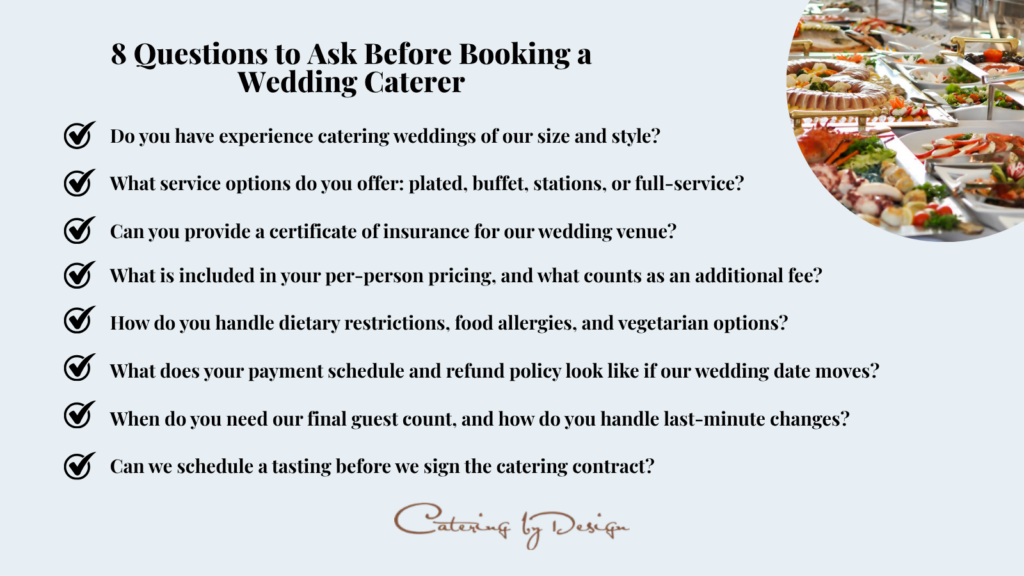
Get every answer in writing. Verbal promises that don’t make it into the catering contract have a habit of disappearing.
A few warning signs to take seriously while you’re vetting a wedding caterer:
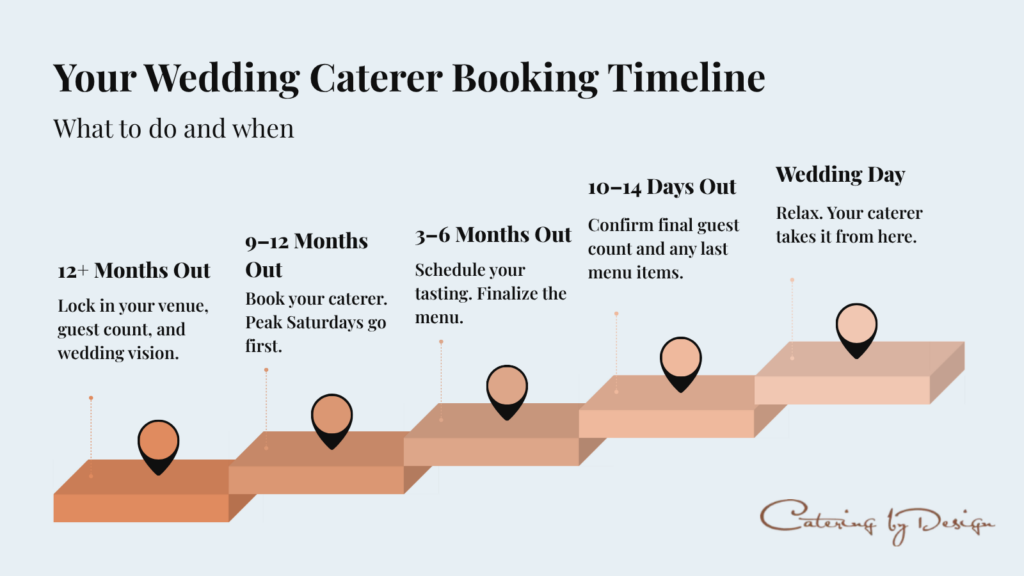
Once you’ve found the right wedding caterer, book quickly. About 12 or more months out, lock in your venue, guest count estimate, and overall wedding vision so you have something concrete to bring to caterers. Nine to 12 months out is when you actually want to book, since reputable caterers are reserved that far ahead for peak season Saturdays and the best caterer in your area is often booked even further out.
Three to six months out, schedule your tasting and finalize the menu, including any custom menu items, station selections, or dietary swaps. Ten to fourteen days out, confirm your final guest count and lock in any last menu adjustments so the kitchen has a clean number to work from. By the time the wedding day arrives, your job is to relax, enjoy the celebration, and let your caterer take it from there.
Selecting a wedding caterer is part research, part chemistry. The right caterer will make the planning process feel collaborative, will treat your wedding meal like it matters, and will make sure your guests are talking about the delicious food long after the wedding day is over. The perfect caterer becomes a partner, not just a vendor.
If you’re planning a wedding in the Triangle, Catering By Design has been crafting custom menus and full-service wedding catering experiences since 2000. We offer complimentary tastings for weddings of 50 or more, and our catering service handles every detail from the cocktail hour through cleanup. Whether you’re planning an intimate ceremony or a 300-guest reception, our team treats every wedding with the same care.
Reach out today to start your wedding planning conversation!